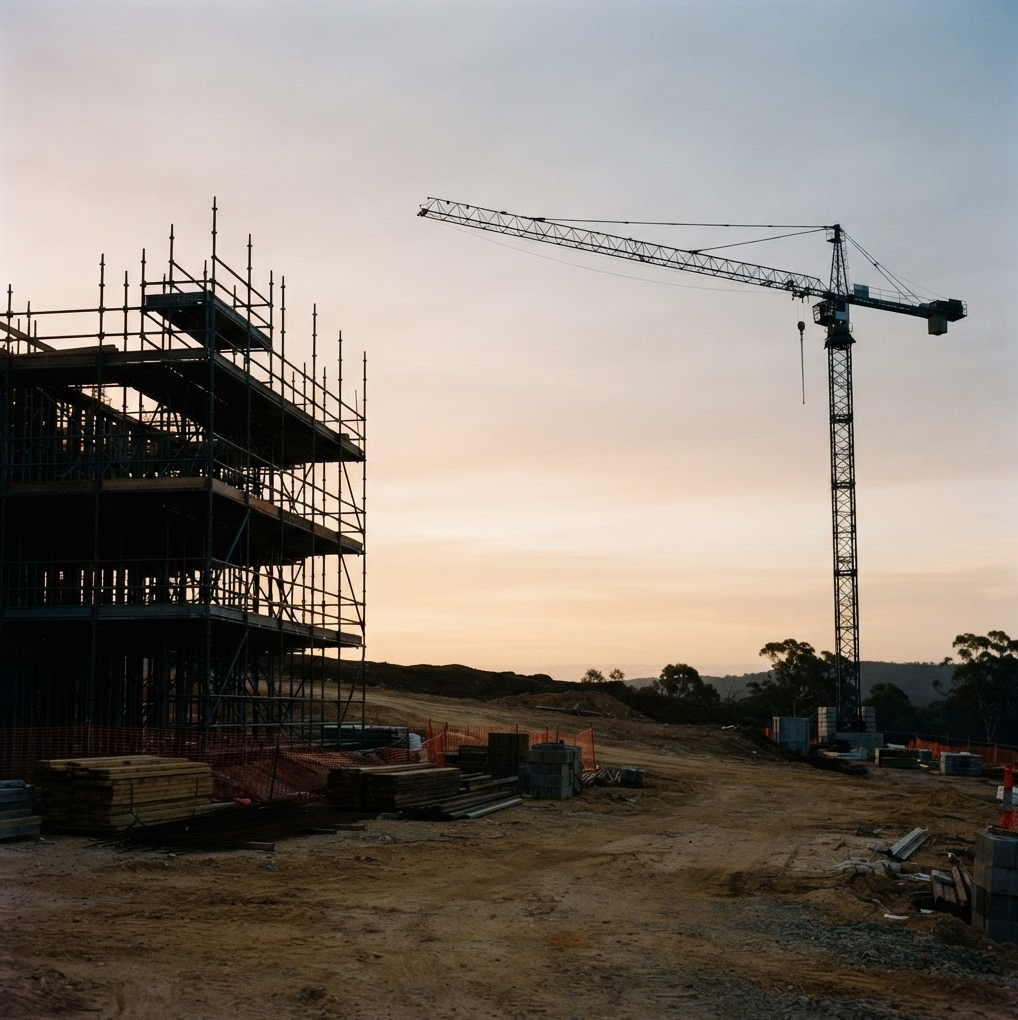
Tradie, FIFO & Site Workers
WHO WE HELP
You turn up every day. You get it done. You look out for your mates on site. But lately, something's off.
Maybe you're not sleeping properly. You're snapping at home. You're keeping busy so you don't have to think too much, but the moment things go quiet, it all creeps back in.
You're not broken. You're carrying a lot. And you've probably been carrying it for a while without telling anyone.
At FirstSteps, we make getting support as straightforward as possible with online sessions, no waiting rooms, and no one on-site knowing your business.
Plain-language support for the people who turn up every day and get it done.
What's actually going on out there.
THE REALITY
Trades, FIFO, and site work are some of Australia's toughest environments - not just physically. Whether you're on the tools, managing a site, or doing rotations away from home, the pressure is constant. Deadlines, budget blowouts, subcontractors not showing, injuries on site, financial stress, bullying, long hours away from family.
The higher up the chain you go, the more you carry - and most of you just push through because that's what you do.
But pushing through has a cost. The reason most don't get help isn't weakness. It's that the industry makes it hard - there's no easy time to stop, there's stigma, and there's the worry that someone will find out. So you say nothing, and keep going.
What we hear from tradies, FIFO, and site workers.
WHAT WE HEAR
“I can’t switch off.”
You finish the shift, but your head's still going. The radio's off, the ute's parked, and your brain keeps running through everything. Sleep's a battle and quiet feels worse than noise.
“I'm just not the same as I used to be.”
You don't find much funny anymore. The things you used to enjoy feel flat. People notice, but you brush it off because you don't know how to explain it.
“I'm losing my temper over nothing.”
Little things set you off - a dropped tool, a question at dinner. You know it's not really about them, but the fuse is just shorter than it used to be, and you can't seem to get it back.
“I come home and feel like a stranger.”
You walk in the door, and it's like you're watching your own life from the outside. The missus, the kids - you love them, but you feel miles away even when you're in the room.
“I'm not sleeping.”
You're wrecked all day, but the moment your head hits the pillow, you're wide awake. Or you crash out, and you're up at 3 am with your mind going flat out.
“I don't want to bother anyone with it.”
Everyone's got their own stuff going on. Yours doesn't feel bad enough to bring up, or you reckon they wouldn't get it anyway. So you keep it to yourself.
“Something happened on site, and I can't shake it.”
There was an incident - a near miss, an injury, something you don't really talk about. It replays when you're not busy, and you've been staying busy on purpose.
“I can't let anyone see I'm struggling.”
On-site, you've gotta be the one who's got it together. So you hold it in all day, every day. The thought of letting that slip feels worse than carrying it.
….. Any of this sound familiar?
Why getting help feels hard.
THE HONEST PART
The hours and the lifestyle
Early starts, long days, site-to-site work, FIFO rotations. There's no obvious time to get support, and most services run 9 to 5. Online counselling means you can fit a session around your roster — at lunch, after knock-off, or from the car.
Financial pressure
Variable income, slow-paying clients, rising material costs, slow periods between contracts. Money stress is one of the biggest drivers of anxiety and relationship breakdown in this industry, and it's rarely talked about.
Relationship strain
The pressure doesn't stay at work. Long hours, coming home wired and short-tempered, not being present - it puts a strain on relationships even when both people are trying their best.
Being away from home
Weeks on, weeks off sounds straightforward until you're the one missing school events, coming home to a family that's moved on without you, and trying to reconnect in the few days you have before you're gone again.
The culture on site
You don't complain. You don't show that something's getting to you. You get on with it. That culture keeps people safe on site - but it can keep them stuck when they're struggling.
What happened on site
Serious incidents leave a mark. If you've been through something traumatic at work - whether recently or years ago - and it's still affecting you, that's not weakness. That's how the brain responds to overwhelming experiences.
NO JARGON
What counselling actually looks like here.
No couch. No tissues on a coffee table. No jargon. Online sessions via video call - you can be at home, in the car, walk and talk, wherever works. Sessions are confidential. Your employer doesn't know. Your mates don't know.
It's just a conversation, at a level you're comfortable with. We work at your pace. You don't have to have it figured out before you come. You don't need the right words. You just need to show up.
INDEPENDENT · CONFIDENTIAL ·
FOCUSED ON YOU
INDIVIDUAL COUNSELLING
Just you and the work of getting back on top.
One-to-one sessions for whatever you're carrying - sleep, temper, the stuff from site, the feeling of being a stranger in your own home. Straightforward, no pressure, at your pace.
COUPLES COUNSELLING
For the people waiting at home.
The roster and the road take a toll on relationships too. Couples sessions give you both a chance to slow down, actually hear each other, and find a way back to the same page.
One More Thing
If you've got a mate who's doing it tough - a worker who's gone quiet, or who's not themselves - sometimes the most useful thing you can do is send them our link and say...
"I found this, might be worth a look."
You don't have to have the big conversation.
You just have to make it a little easier for them to take their first step.
A GROUNDED SPACE TO BEGIN AGAIN
You don’t have to be ready.
Just willing.
— Karyn